Published
23 June 2026
Read
5 min read
How Human Appeal responded to Pakistan's catastrophic 2022 floods — and the 25-kilometre embankment it built that held the river back and saved a community. A disaster, and the work that answered it.
Sports Legends Media
In this article
In brief
01
In 2022, Pakistan endured catastrophic flooding — among the worst in its history, affecting some 33 million people. Amid that, one piece of Human Appeal's work stands out — not a handout, but a wall: a 25-kilometre embankment the charity had built, which held the floodwater back and saved a community from being washed away.
It is a story about the difference between relief and resilience — between helping after a disaster, and building so the next one does less harm.
Key facts
- 01Pakistan's 2022 floods affected around 33 million people, roughly half of them children.
- 02The floods killed more than 1,350 people and destroyed around 550,000 houses (figures the charity cites).
- 03Human Appeal's 25-kilometre embankment on the Chenab River, in District Rahim Yar Khan, held back the 2022 floodwater and spared Basti Emaan village.
- 04The charity says it was the only charity providing food aid and financial assistance in the districts where it ran flood relief.
- 05For wider scale: the UK's Disasters Emergency Committee appeal raised £50 million and its member charities reached over 3 million people over two years. (Human Appeal is not a DEC member; this is context, not its own funding.)
02
The scale of the water
It is hard to picture a flood that affects 33 million people. So start with the smaller, sharper facts.
The 2022 monsoon, the charity recounts, hit Sindh and Balochistan hardest, with Punjab and Khyber Pakhtunkhwa badly affected too. It killed more than 1,350 people. It destroyed around 550,000 houses and some two million acres of cropland. Roughly half of those affected were children. The UK's Disasters Emergency Committee, launching its own appeal, put it plainly: one in seven people in the country were affected.
These are the kinds of numbers that flatten into noise. The way to keep them real is to remember that each destroyed house was someone's home, and each acre of ruined cropland was someone's next meal. A flood does not just take what you have. It takes what you were going to eat.
03
The wall that held
Here is the part of the story worth slowing down for.
Years earlier, after the devastating 2010 floods, Human Appeal had built a 25-kilometre embankment on the Chenab River, in District Rahim Yar Khan. It was the slow, unglamorous kind of project that rarely makes the news — a long earthwork, built above the river level, designed for a disaster that had not yet come.
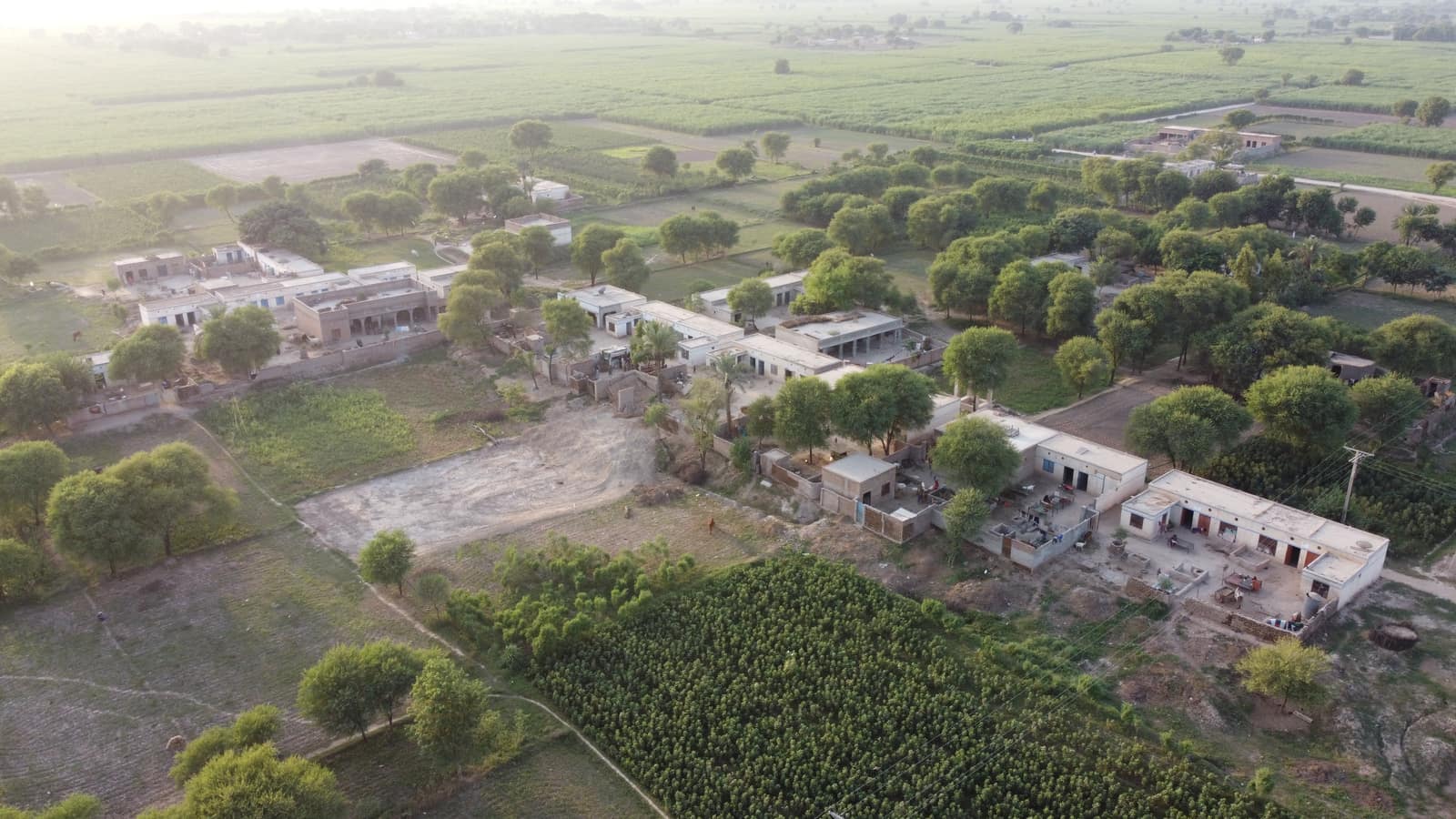
In 2022, the disaster came. And the embankment held. The charity reports that it kept the floodwater back, sparing Basti Emaan village — its homes, its fields, its crops — from being washed away. A community that should, by the logic of the water, have lost everything, did not.
This is what resilience actually looks like when it works: invisible until the day it isn't. The charity also notes something telling about that district — that when it built the embankment, no other organisation was working on construction there, and that during the floods it was the only charity providing food aid and financial assistance in the areas where it operated. The wall was built because someone decided to do the work no one else would, years before there was any credit in it.
04
Relief and resilience
The Pakistan story holds the two halves of good humanitarian work in one frame.
There is relief — the food and the financial assistance that arrived when families had lost everything, the immediate answer to an immediate catastrophe. And there is resilience — the embankment, built a decade earlier, that meant a whole community needed less relief because it had lost less in the first place.
A charity that only does the first is forever responding. A charity that also does the second is, quietly, trying to make itself less necessary next time. Pakistan keeps facing what the charity calls cyclical climate shocks — floods, droughts, food insecurity, returning season after season. The wall on the Chenab is what an organisation looks like when it has decided to think one disaster ahead.
How to support this work
05
Pakistan's recovery is not finished, and the climate shocks keep coming. To support Human Appeal's work there, give directly through Human Appeal's Pakistan appeal.
And if you would like to raise funds for resilience work like this through an event — a dinner or gala with a cricket legend at its heart — plan a fundraising partnership with Sports Legends Media.
Reader Questions
FAQ
How bad were Pakistan's 2022 floods?+
The 2022 floods were among the worst in Pakistan's history, affecting around 33 million people — roughly half of them children — killing more than 1,350 people and destroying around 550,000 houses, according to figures Human Appeal cites.
What did Human Appeal's embankment do?+
Human Appeal reports that a 25-kilometre embankment it had built on the Chenab River, in District Rahim Yar Khan, held back the 2022 floodwater and spared Basti Emaan village from being washed away.
Was Human Appeal part of the DEC Pakistan Floods Appeal?+
No. Human Appeal is not a member of the Disasters Emergency Committee. The DEC appeal — which raised £50 million and reached over 3 million people — is referenced here only to convey the scale of the disaster and the wider response.
Source Notes
More from this series
Gaza
Gaza: Aid at the Edge of What Is Possible
How Human Appeal delivers aid in Gaza — meals, clean water and mobile clinics — with the figures from its 2024 annual report. A plain account of humanitarian work under impossible conditions.
Clean Water
Clean Water: The Gift That Keeps Giving
How Human Appeal's water wells work — what a well costs, who it reaches, and why clean water is the charity's most enduring gift. Sourced from Human Appeal.